


What Happened
In mid-August, Millcreek took down a Flock Safety license plate camera mounted near Millcreek Common after the city realized nobody had authorized it. Flock hasn’t said who installed it.
On August 13, a group called Utah Civic Compact revealed that Weber County’s 10 license plate cameras have been included in more than 5 million searches since early 2022, mostly by law enforcement agencies outside Utah running nationwide searches. That same day, Flock itself announced a round of platform changes meant to answer a year of misuse stories.
Meanwhile, volunteers with the crowdsourced camera-mapping project DeFlock have found over 850 LPR (License Plate Reader) cameras across Utah. And the cameras themselves are being vandalized, sometimes within days of going up.
Back up. What exactly is a Flock camera?
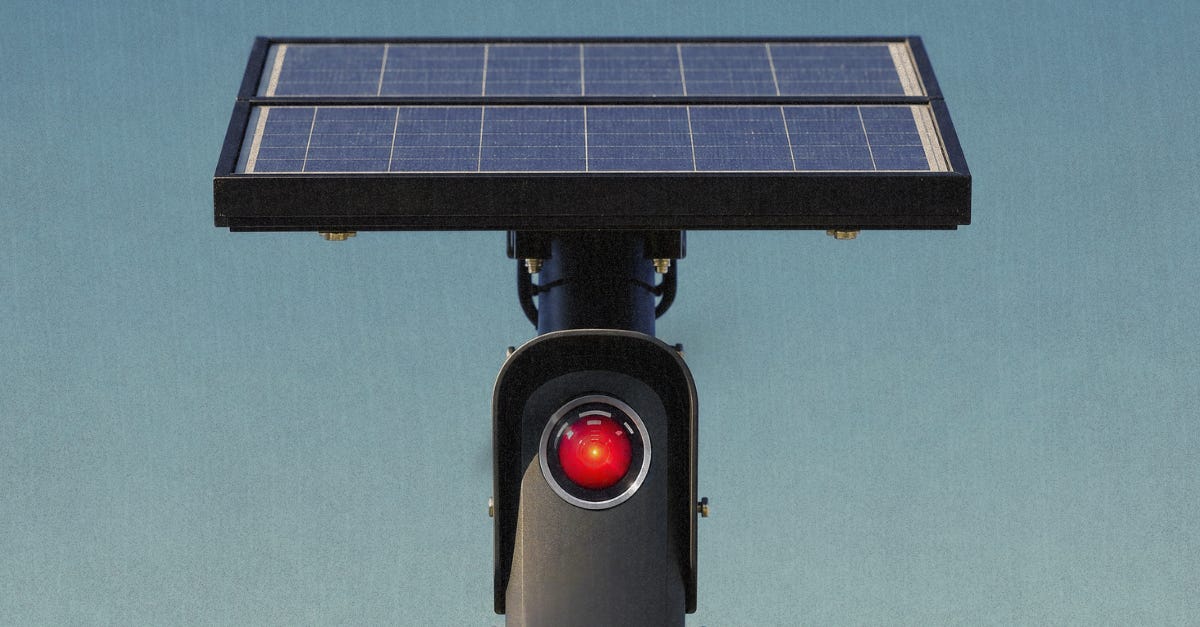
Flock Safety is an Atlanta company that has become the country’s largest seller of automatic license plate readers, or ALPRs. The pole-mounted, solar-powered cameras photograph every vehicle that passes, logging the plate along with the make, model, color, and identifying details like roof racks and bumper stickers. That data goes into a searchable database, and agencies can opt in to sharing networks that let police in one state search cameras in another. Flock says it operates in more than 5,000 communities, and the company told KUTV it has partnered with 50 law enforcement agencies in Utah.
Ogden is Utah’s biggest Flock spender, paying the company $123,000 in 2025 to run 41 cameras, followed by Wayne County at $95,100, and Provo at $75,406, according to KUER’s review of state vendor data. But not every plate reader is a Flock. Salt Lake City uses a competing Motorola system, which the police department has used in more than 6,400 investigations since 2021, mostly stolen vehicle cases.
Why everyone is suddenly concerned
Last year, 404 Media reported that a sheriff’s deputy in Texas searched more than 83,000 cameras nationwide for a woman whose family said she had self-administered an abortion. The search log’s stated reason: “had an abortion, search for female.” The sheriff and Flock said it was a welfare check, although court records showed deputies discussed potential criminal charges with prosecutors.
Then this month the Washington Post found at least 50 law enforcement officers charged with or accused of misusing Flock and other plate reader systems. Many of them allegedly used the cameras to track exes or family members. DeFlock counts more than 50 jurisdictions that have canceled, suspended, rejected, or deactivated Flock deployments this year. Vandalism videos are a whole genre now, even in Utah.
Flock has responded with new rules. By Jan. 1, all law enforcement customers must use an auditing tool that flags abnormal search behavior and locks the user out pending review. Default data retention drops from 30 days to seven, longer holds require a case number, and every search must be tied to a records system code. CEO Garrett Langley called the changes a “continuation of our commitment to both safety and privacy.” Critics note that most of these guardrails rely on the agencies policing themselves.
Below are the arguments from critics and supporters of Flock cameras, followed by Executive Editor Nick Huey’s take.
What critics of ALPR cameras are saying
The potential costs of this tracking network outweigh potential benefits.
The misuse isn’t hypothetical. Immigration lookups, officers tracking exes, and an abortion search have all happened.
This violates Americans’ constitutional right to privacy.
Clark Dice, communications director for Utah Civic Compact, emphasized the urgency of regulating this technology now.
“This is how it starts, a mechanism for public safety, a couple cameras just to catch criminals, the bad guys. What it ends with is huge amounts of data tracking people’s movements, their behaviors, and their whereabouts.
The time is now for us to set these regulations and set these guidelines in place so that this technology is not abused by outside governmental agencies outside of the state of Utah, and so that the people inside of the state of Utah can know that their privacy and their data are protected.”
Rep. Mike Kennedy, R-Utah, argues that this violates Americans’ constitutional right to privacy:
“Flock cameras have no business tracking law-abiding citizens, and I stand in clear opposition to their spread across our country.
“We must oppose even the slightest erosion of the constitutional protections that built this Republic, and we cannot allow quiet government overreach to become the norm.
“All our constitutional rights deserve to be defended with unwavering integrity, and American citizens’ right to personal privacy is among our most fundamental.”
Connor Boyack, president of the Libertas Institute in Lehi, argues that the risks of a nationwide surveillance network are too great, even if perfect safety is the benefit:
“Perfect safety has never been on the menu of human life, and the societies that chased it hardest made themselves miserable without ever catching it. What is on the menu is a choice older than the republic: whether we will live as free people who accept the risks freedom carries, or as monitored people who traded their birthright for a promise neither Flock nor their friends in law enforcement can keep.
“Our ancestors made that choice under far graver dangers than ours, and they left us a clear answer, one best articulated by Franklin: ‘Those who would give up essential Liberty, to purchase a little temporary Safety, deserve neither Liberty nor Safety.’ The least we can do is decline to auction off our liberty, one pole-mounted camera at a time.”
What supporters of the cameras are saying
They solve crimes that would otherwise never be solved.
Misuse is rare, it gets punished, and Flock is now engineering against it.
We can minimize privacy risks without abandoning this helpful tool.
Ogden Police Chief Jake Sube, who runs the state’s largest Flock deployment, told his city council the cameras changed what’s possible:
“I’d love to add more. Hundred percent. I would love to have more ALPRs across all neighborhoods, all in and outs, accesses of the city … It is solving crimes we never would have even had any opportunity to investigate … ALPRs were instrumental and critical in apprehending that suspect and recovering the child safely. Literally, the ALPR hit was within half a block of where the suspect vehicle was located at a hotel in Colorado.”
Flock points to their safety measures working:
“Oftentimes in reported cases, the officer was identified because Flock systems create tamper-proof audit logs that record who searched what, when, and why. Those logs helped investigators uncover misconduct, support prosecutions, and hold officers accountable…
Every search is tied to a user. Every search is logged. Agencies can review usage histories. Searches require a standardized offense type. Audit records cannot simply be erased when someone makes a bad decision.”
Writing for The Atlantic, Charles Fain Lehman, asserts that ALPRs may be responsible for a reduction in crime:
“The case for Flock is simple. Cameras help police catch criminals. That reduces crime through two channels: incapacitating offenders who are caught and convicted, and increasing the certainty of apprehension, which theoretically should deter criminals from offending in the first place. But is it true in practice? Although the research base is still developing, the answer is ‘probably.’… A 2017 study found ALPRs were correlated with a reduction in violent crime; a 2019 paper found suggestive but not conclusive evidence of a reduction in auto theft and robbery.”
“The Fourth Amendment’s protections exist exactly because of the very real potential for abuse of police officers’ extraordinary powers. The question, though, is whether we need to forgo the crime-reducing benefits of ALPRs in order to minimize the risks to our privacy. Such absolutism is unwarranted. Intelligently regulated, ALPRs can be one among many tools in the toolbox of smarter — and therefore less severe — police forces. Dumping the cameras would just be foolish.”
My take
In the right hands, Flock cameras solve serious crimes.
In the wrong hands, they are a powerful and pervasive surveillance network.
Utah is actually one of the better states when it comes to ALPR laws. But there are three big changes that need to happen.
Let’s get the easy part out of the way.
License plate readers do solve crimes. A kidnapped 13-year-old from Ogden was recovered because a camera in Colorado pinged. A homicide suspect fled Salt Lake City and was caught in Wyoming. Salt Lake City alone has used its cameras in over 6,400 investigations. If my kid were in the back of a suspect’s car, I would not be philosophical about the camera that found her.
So the question isn’t whether these cameras catch criminals. They do. The question is whether we are OK risking bad actors having access to personal data in order to make the world a little (or a lot) safer.
We curtail privacy in the name of justice all the time. Police can search your house. They can read your mail, tap your phone, swab your cheek, freeze your bank records. Each of those is a bigger intrusion than photographing your bumper on 600 South.
But these cameras are different.
Look at how every one of those other surveillance tools work. Suspicion comes first. A gatekeeper comes second. A judge who doesn’t work for the police signs a warrant naming a specific person and place.
A networked license plate reader system inverts the entire sequence. Surveillance comes first, of everyone, automatically. The only thing stopping abuse is a text box where a deputy types his own justification. That’s how a Texas deputy could sit down one morning and query 83,000 cameras across the country, almost as easily as a Google search.
It turns out that for most of American history, our strongest privacy protection wasn’t a law. It was cost. Tailing one car took teams of officers working in shifts, so the government only did it when it really mattered. Today, perfect and cheap surveillance is an actual possibility, and it’s forcing us to rethink the rules.
In Carpenter v. United States, the Supreme Court faced a similar legal question. Timothy Carpenter helped rob a string of phone stores around Detroit, and the FBI caught him by using months of his phone’s location records obtained without a warrant. The Supreme Court ruled the search unconstitutional. I could see a similar argument winning here.
So here’s where I’ve landed. We should tolerate safety tools that are aimed, gatekept, and temporary. Pointed at a suspect, approved by someone outside the chain of command, and gone when the case closes. We should refuse tools that are universal, self-serve, and permanent, no matter how many crimes they solve.
Those are some concrete criteria. Let’s grade Utah.
Aimed? B+ Utah actually regulates these cameras more than most states. Under state law, police can only access captured plate data for four reasons: an active criminal investigation, an outstanding warrant, a missing or endangered person, or a stolen vehicle.
Gatekept? D. Utah’s ALPR laws are pretty good, but they’re too self-enforced for me to take them seriously. The law does not include regular public accounting of how the systems are used, independent audits, or rules enforcement for out-of-state agencies that search Utah Flock data. When someone can enter ‘hehehe’ as their search reason and get approved, there’s something wrong with your gatekeeping mechanism.
Temporary? C. ALPR data can be kept a maximum of nine months, can’t be sold, and agencies must publicly post their use policies. That’s all well and good, but Flock’s new default is seven days before automatic deletion. That’s a pretty wide gap.
So overall, pretty middling grade for our dear old Utah. Below are three changes that I think would get us to a solid B+ across the board.
Change #1: Establish independent audits.
Right now agencies audit themselves. Independent audits are a pain. But it should be painful to surveil 3.5 million Utahns. The ability to hold bad actors accountable is pretty non-negotiable with technology this powerful.
Change #2: Any searches past 7 days require a warrant.
90% of Flock searches without a full plate occur within the first seven days. If we really need the data beyond that timeframe, it should require a judge’s stamp of approval.
Change #3: We need to delete the data sooner.
We can create the perfect set of rules to aim and gatekeep ALPR data. But those rules can be broken by bad actors — or worse, a bad government. A bad cop can be fired. A bad government inherits the database. Every record of which cars parked at which churches, which clinics, which gun shows, which political meetings.
Automatic rapid deletion of data protects you from everyone.
That law will have a price. Somewhere down the line, a detective will open a case a few months old and find the footage already gone. A guilty man will walk because of it.
We’ve made that trade before. When the Founding Fathers banned general warrants, they gave up an incredibly useful policing tool to preserve the privacy and freedom of everyday Americans.
That was in 1791.
I hope we repeat that decision in 2027.
Think we got this one wrong? Tell us!
The sharpest reader responses may end up in a future article.